The new software craft
A friend of mine is a solo nontechnical founder with a product background. For years he employed engineers in Ukraine to build his product, but he wasn’t a programmer, so he couldn’t read the code they wrote, or apply much scrutiny to their technical decisions; functionally, he had to trust their judgment on things he couldn’t verify.
You’ve likely had a boss like this somewhere up the reporting chain—a GM, a CEO, maybe a board member or investor—who doesn’t read code and doesn’t care about its test coverage. They have to trust, on some level, that you do, but they’re assessing progress against things they can evaluate: is the business moving faster? Are we shipping, and focused on the right thing?
My friend doesn’t employ a lot of those guys anymore. They haven’t become worse coders, but LLMs have become way better at writing code.
I love that I can nerd out with my product friend on optimizing token costs or choosing the right harness; suddenly, to my surprise and delight, we’re now speaking the same language. But it feels weird, in some ways, that we are. The process of creating software is becoming rapidly decoupled from the hand-crafting of code. For those of us who’ve spent our careers dedicated not just to making software but to the craft of it, what is craft practice now?
Craft is fundamentally about caring
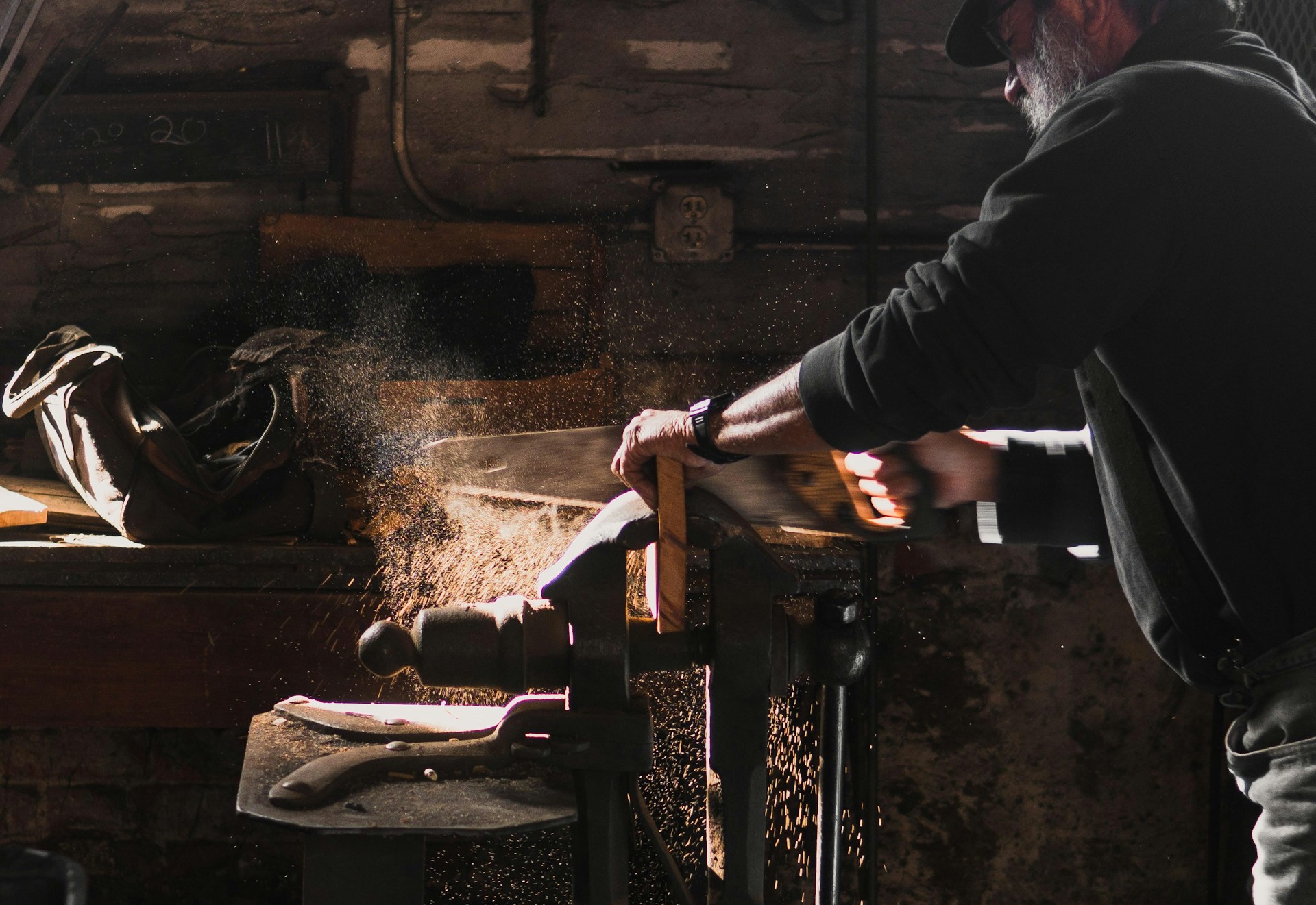
To practice craft is to value the making, sometimes in irrational or inefficient ways, as an intrinsic good. There are still carpenters out there who make furniture by hand, and the people who practice it at a high level are legitimately excellent at something worth being excellent at. But there are also dramatically fewer of them than there used to be. Even the ones still making chairs “by hand” usually aren’t pushing each and every saw-stroke back and forth across the wood with their scrawny human muscles; people like motors.
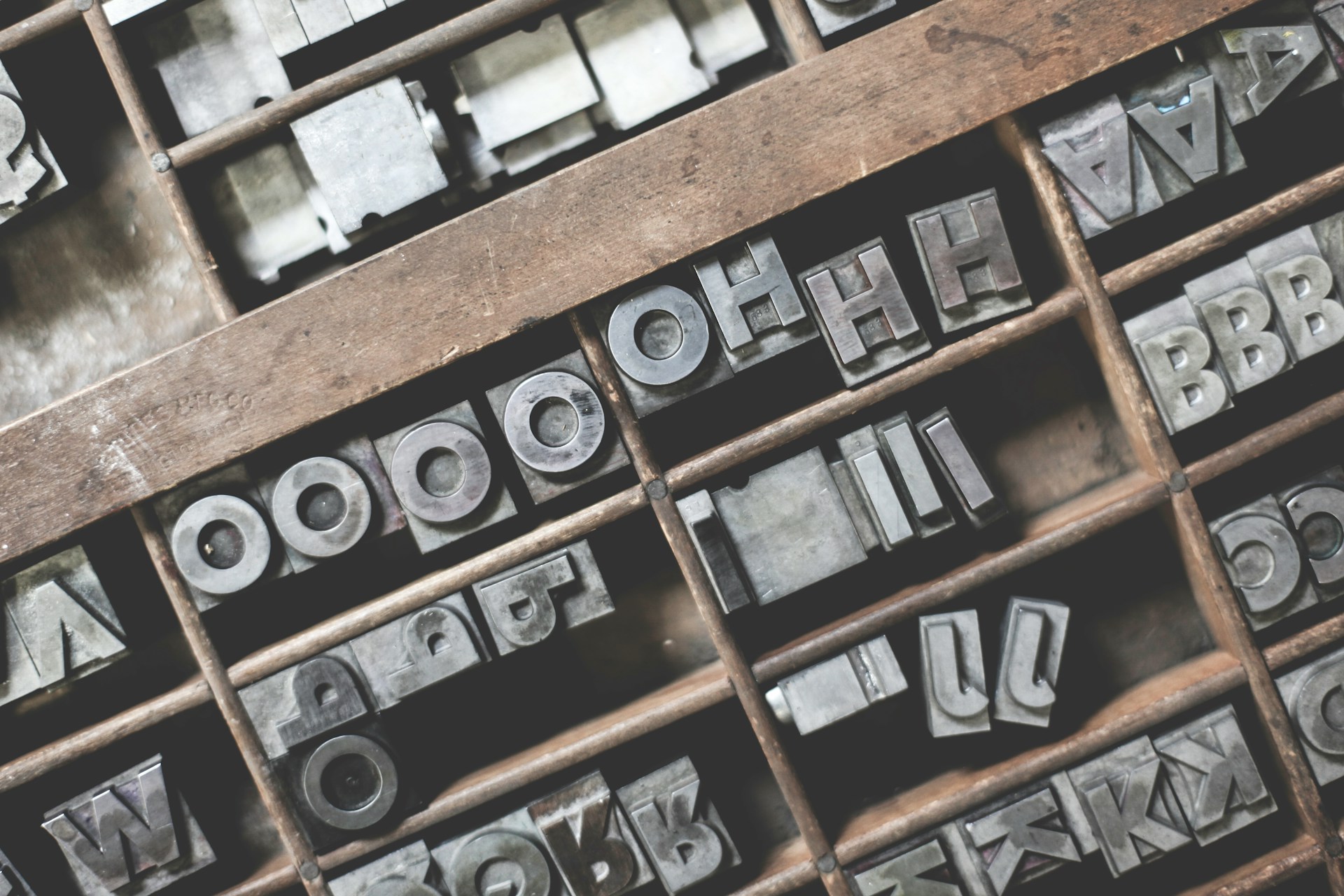
Automation has always served to redraw the line between what requires care and attention and what doesn’t. Desktop publishing didn’t destroy typesetting, but it thoroughly eliminated the part of it that consisted of tediously placing sorts, which was itself the product of a series of technological innovations focused on replicating data. The decline of that sort of craft led to other sorts of investment in design, information hierarchy, and visual communication, even as the mechanical skill stopped being a useful differentiator. Ironically, the death of manual typography probably dramatically expanded the number of people who care about the craft of good type design.
AI Coding harnesses are, in this moment, something like power saws for code. Consequently, many traditional markers for craft are obsolete. You could TDD your own code, there’s nothing stopping you, but we’re sort of in a John Henry situation here: why give yourself a heart attack? Let the LLM do it. While we often romanticize craft, it is difficult to separate it from either the commercial imperative—we all gotta eat—or the role that automation plays in it.
And indeed, an awful lot of traditional software craftspeople have always used automation pretty happily; heavyweight IDEs have included automated refactoring tools for decades. We were never above automation if it served our purposes, and didn’t think of ourselves as any less caring because we didn’t hand-edit every file with a text editor with syntax highlighting turned off. Tools matter; the way you practice and think about your craft informs the choices you make.
This is fundamentally a big-tent argument for software craft: that it still exists and that it matters, but that the practices have changed (are changing). It’s natural to mourn the passing of certain ways of working; I’ll really miss pair programming. But when I think of craft practitioners, I think of the community of people who genuinely care both about the making and about what is made, and the community is still there.
Craft has always been a product of the technological present and its past
Software is now facing the same transition as the carpenter, but it’s precisely because it’s happened that I now share more language in common, not less, with my friend. LLMs have brought business owners like him closer to the act of crafting software, and in turn they’ve brought many engineers closer to the product and the business.
There is an argument that software creation is fundamentally non-automatable with loose, high-level descriptions of features, like PRDs, because code is definitionally there to express precise behavior; any human language capable of that kind precision is itself a programming language. You can’t trust LLMs to make every decision correctly.
To which I say: have you forgotten how inconsequential many of these decisions are? Is a user going to notice exactly how you opened and closed a file handle, as long as it was done safely? Whether you use a for-loop or a map function? Will they notice your hexagonal architecture, your repository pattern, your elegant type abstractions? They will not, unless it affects the way their software works. This category of decision has fallen below the line of commercial legibility; even programmers won’t notice. Code-level decisions have always been at best a predictor of software quality, but many of the things we once argued over so fiercely are no longer “architecture”, because they’re now cheap and easy to change.
The craft practices that informed the creation of code made sense when humans were the primary producers of it, even though such practices have always been more widely discussed than followed. The cost of human error was a meaningful constraint on what could be shipped, and as professionals, we were ethically obliged to reduce that error if we could.
But it seems clear at this point that humans are no longer the primary producers of code. As of this writing, Chinese open-weight models have reached near state-of-the-art code generation capability at a price point that’s an order of magnitude cheaper than frontier ones, much more quickly than even the more bullish analysts expected. The gap between what these tools can produce and what a skilled programmer can has been closing steadily and is perhaps now gone. The claim that LLM code quality is too poor to change what disciplines matter is an argument about the present state, and the present state is already not quite what it was six months ago when everyone woke up one morning in the winter of 2025, hungover on egg nog, and took a poke at Opus 4.5.
Notably, all of this will still be true even if (once?) the bubble pops. The models are already out there.
Traditional craft practices are a hard thing to lose, because mindful practice develops judgment; TDD, for example, is a design tool, not (primarily) a quality reinforcement mechanism. But, good news! Mistakes are still emphatically available to anyone writing software with LLMs, and mistakes are an important way to develop judgment.
So where does craft go next?
Software craft is dead; long live software craft
To see the new software craft emerging, you only have to look at Reddit, or HN, or spend time with a software engineer or founder. There’s obsessive discussion of model quality, harness, plugin selection, prompt approach. You’ll also find renewed, intense discussion of high-level system design, and thorny product problems like onboarding, retention, and design.
Notably, not everyone is tracking with this stuff. For every engineer obsessively comparing the merits of each new model, there are four others taking their cues from folks who are closer to the frontier. The focus of earnest, engaged practitioners has shifted.
In the part of the industry where I spend my time and focus, this points strongly to the idea that product engineers will thrive in this ecosystem, and that the notion of it will broaden. Product engineering is meant to be outcome-oriented and therefore outward-facing: does this software solve the problem, does it fit the business need, is the system observable enough to know when it’s failing? LLMs enable engineers of this sort to be even more aligned with the business, not less.
And so my sense is that the future of craft be defined by teams who are relentlessly focused on automation that serves high-quality outcomes: what is harness engineering if not a way to control quality at pace? Observability and testing still matter in a way that feels increasingly urgent. Fitness to form—systems of delivery designed for end to end delivery, like monorepos—become a bigger deal. Prospering means building features that meet a business need, knowing what good looks like from the outside and working backwards from there. Craft will then increasingly focus on the way humans experience our software, and less on the micro-decisions that led us there.
The practices that don’t especially matter in this frame are the ones that were always primarily about legibility and taste at the level of the individual lines of code, but structure and behavior matter more than ever. Software craft is dead; long live software craft.
This is meant to be helpful, sort of
Fewer people will practice traditional software craft construction practices, in the same way that fewer people build benches today than did a century ago, or fewer people farm, or typeset; and the ones who eschew modern tools for traditional ones will be fewer still.
And while I don’t think demand has gone down all that much, I’d be lying if I said I didn’t experience the same concern as others in our industry about the future of software creation. The economic signal from my founder friend is not reassuring on this point and isn’t particularly meant to be. But I do think the term “software craft” is broad enough to cover how he works, even though he’s not reading the code line-by-line. He still cares about what is made, and how he makes it.
Which is why I think it’s important to stake out a new craft, and to embrace the new normal, for however long it lasts, and ditch the stuff that doesn’t matter much anymore. Truth be told, I won’t miss the time I spent arguing with other engineers over function signatures while the business burned down around us.
Among those practitioners who’ll still do excellent work, what will that work look like, what will it comprise? A lot of it will be focused on tooling, and arguments over harnesses and models. A lot of it will be focused on practices like mindful prompting, skills, and effective agent orchestartion. And on what is made, I think it’ll look increasingly like product work: owning problems end to end, moving from a user need through to a shipped solution without losing the thread, knowing whether what they’ve built actually works because they’re talking to users and watching the data. Depth will still be valuable in some places, and laudable for its own sake, and necessary for those pushing the frontiers of specific areas. But with each new model release and harness improvement, the frontiers are pushed further and further by the tools themselves.
The person sitting in the chair you made doesn’t know how you cut the wood; similarly, unless you’ve audited every line of code of every software product you’ve ever used, you probably judge that software in terms of its observable behaviors. And to re-embrace software craft, we must become that CEO hovering above us, the one who cared about business outcomes. What we need to refine our taste and judgment on is whether the stuff we make solves our users’ problems. There is still room for excellence here, and the pursuit of craft for its own sake. My ardent hope is that what’s left is a closer commitment to the human beings who actually use the stuff you’re making.